
Which sauna is better? We hear it every week, usually from a guest standing between our two doors. We love the question, because the research gives a happy answer: heat itself is the hero, and you get to choose the room you will love being in.
 80–100°Cthe cedar runs hot: the format behind the long-term Finnish data[1]
The case for the cedar classic
The famous long-term results, including the Finnish research linking frequent sauna use to dramatically lower heart risk[1], come from traditional saunas: hot air around 80 to 100°C and steam rising off the rocks. A review of forty clinical studies of sauna bathing found the great majority reported benefit, mostly for the heart, with remarkably few downsides[2]. If sauna research had a hall of fame, this room built it.
The case for infrared
Infrared is the gentler door into the same warmth. The cabin runs around 45 to 60°C and warms your body directly instead of heating the air, so it feels kind from the first minute[3]. The research here is newer and more targeted, and some of it is striking: in a Japanese multicenter trial, supervised infrared sauna therapy improved heart function and walking distance in patients with serious heart failure[4]. That was a hospital protocol rather than a spa day, and it says a lot about how deeply gentle heat can work. A Finnish study also found infrared sessions after hard training helped muscles recover, with less strain on the body than traditional sauna conditions[5].
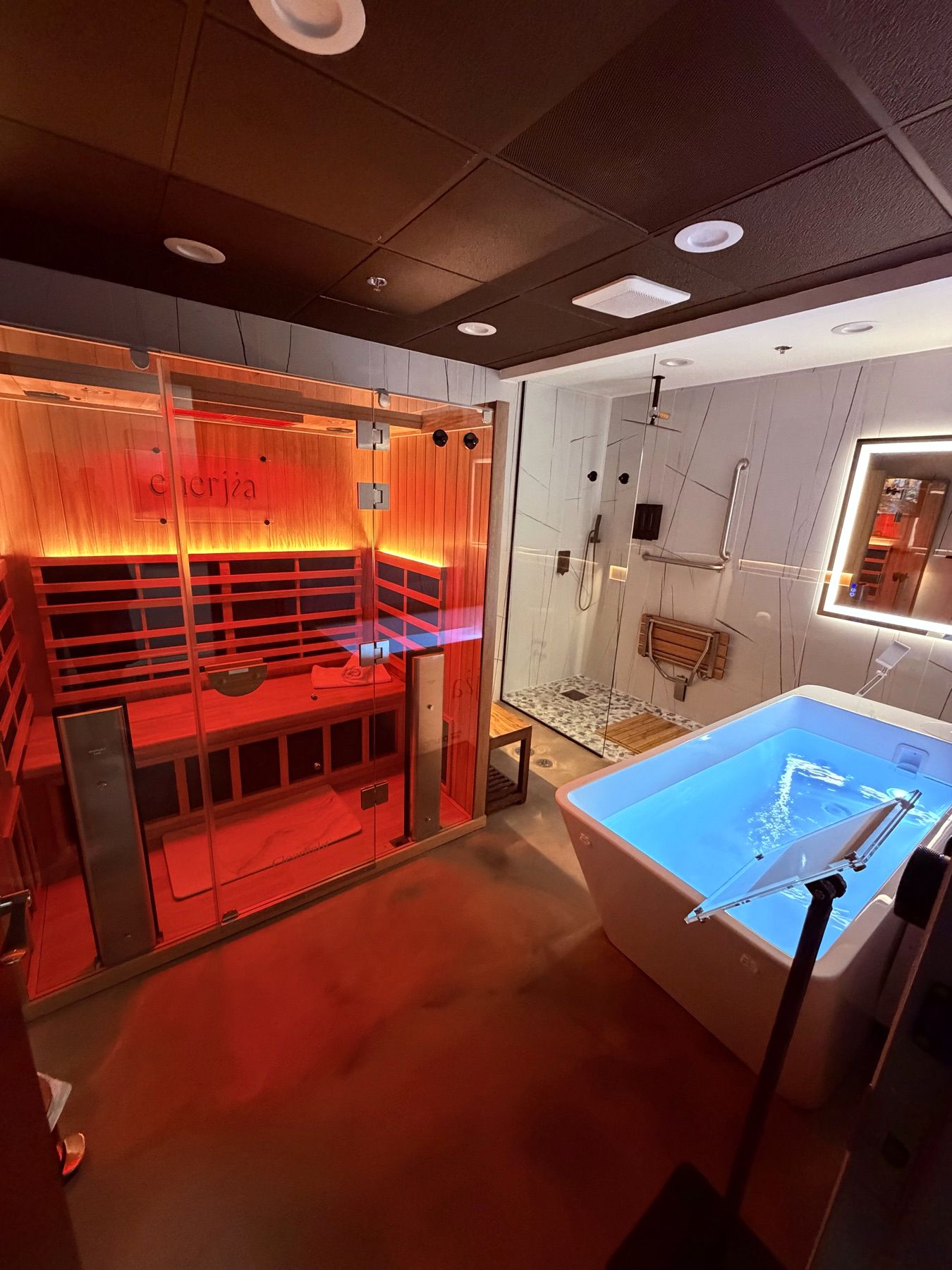 45–60°Cinfrared air temperature: the body heats directly, the room stays gentler[3]
The temperature gap

So which door is yours?
Both rooms deliver the thing the research keeps rewarding: a real rise in core temperature, an elevated heart rate, and a deep sweat[6]. So choose with your comfort rather than your discipline. The best sauna is the one you will come back to week after week, and that is the one doing the famous work.
- The 45–60°C air sounds more inviting than the 80–100°C kind[3].
- You are new to sauna, or heat has felt overwhelming before.
- Your goal is post-training recovery with a lighter physiological load[5].
- You want the ritual: cedar, steam, the pour of löyly.
- You want the room behind the famous long-term Finnish results[1].
- You already love intense heat and a hard, fast sweat.